China's Nickel Foundry: Vice Premier Fang Yi and Jinchuan
From a single green stone found in the frozen Gobi of 1958 to one of the world's foremost nickel producers — the story of the Jinchuan base and the statesman-scientist whose eight working journeys turned potential into an industrial titan.
Jinchang · Hexi Corridor · GansuFounded 19583rd largest Ni-Cu sulfide body worldwideNickel output 330,000 t/yr
By Wing WongReading 11 minDocumentary · History · Metallurgy · Global footprint
3rd
Ni-Cu sulfide rank
Largest in the world
330kt/yr
Nickel-containing output
2024 · full product suite
20+
Companion elements
Ni · Cu · Co · Pt · Pd · Os · Au …
No.300
Fortune Global 500
2024 · 78th on China Top 500
I · The strategic imperative
The metal that defines a nation's industry
Nickel is the quiet backbone of the modern industrial world. It hardens stainless steel, gives aerospace superalloys their strength at extreme temperatures, and today anchors the cathodes of the batteries powering the energy transition. A country's ability to supply its own nickel is, in a real sense, a measure of its industrial sovereignty.
In the middle of the twentieth century, the People's Republic of China entered this arena at a disadvantage. It was widely regarded as a "nickel-poor" nation, dependent on outside supply at a time when access to the metal was tightly restricted. Securing a domestic source was not merely an economic ambition — it was a foundation stone for heavy industry and national defense. The story of how that gap was closed begins not in a boardroom or a laboratory, but on the wind-scoured gravel of the Gobi Desert.
II · 1958 · The malachite spark
A green stone in the Gobi
The northwest Gobi of 1958 was a place of high winds, bitter cold and near-total desolation — a landscape of drifting stones and ice. In June of that year, the 145th Team of the Northwest Coalfield Geological Exploration Bureau was conducting radioactive surveys near Baiji Azui, at the foot of Heihu ("Black Tiger") Mountain, in the Hexi Corridor.
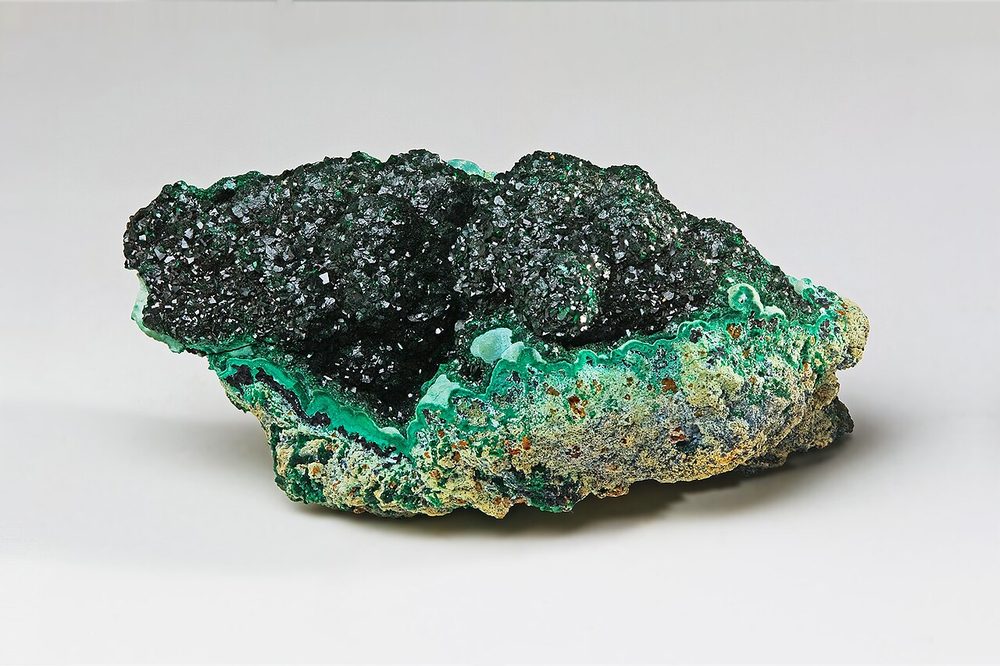
There, geologists Tang Dongfu and Guo Chunshan noticed a cluster of stones coated in a vivid green oxide. They recognized it as malachite — 孔雀石, the "peacock stone" — a classic surface signature of copper. Samples were sent for analysis. When engineer Chen Xin ran the chemistry, the results carried a far larger promise than copper alone: the ore graded roughly 0.9% nickel alongside 16.05% copper. A copper prospect had revealed itself to be a nickel discovery of national consequence.
The peacock stone. Malachite — a copper carbonate hydroxide — weathers bright green at the surface and has guided prospectors to buried metal for millennia. A green-stained sample of it opened the Jinchuan deposit in 1958.
That single specimen has since been described as the "atomic bomb of Chinese industrial geology": it overturned the assumption of a nickel-poor China and set in motion the transformation of an empty stretch of desert into a metallurgical city. Within a year, geological exploration had given way to organized industry.
"From a single stone in the ice, a nation set out to forge its own supply of the metal that hardens steel and lifts aircraft."
On the 1958 discovery at Heihu Mountain
Date
Event
Significance
Jun 1958
Green-stained stones found at Baiji Azui
Identified as malachite — first physical evidence of the deposit
Late 1958
Chemical analysis by engineer Chen Xin
Confirmed ~0.9% Ni and 16.05% Cu — industrial-grade potential
Jun 1959
Yongchang Nickel Mine formally established
Shift from exploration to an organized industrial footing
Jan 1961
Renamed Jinchuan Nonferrous Metals Company
Birth of the corporate identity of the "Nickel Capital"
III · The foundational era · 1959–1966
Building the Yongchang mine from bare ground
The early 1960s called for a rapid build-up of organizational capacity to turn geological promise into working self-sufficiency. Following the first formal reserve report, the Ministry of Metallurgy established the Yongchang Nickel Mine in June 1959. In its first years the work was done largely by hand — steel chisels and iron hammers against hard rock — as the complex assembled China's first domestic production lines for nickel.
The milestones arrived quickly. By 1964 the facility produced 2,041 tons of high-grade matte and its first 22.43 tons of electrolytic nickel. In 1965 it went further, refining platinum-group metals and widening the nation's strategic resource base. The "First Phase Project," completed in 1966, was an integrated 采–选–冶 complex — mining, ore dressing and smelting under one program — designed and built with domestic equipment and expertise. It was a landmark in industrial self-reliance.
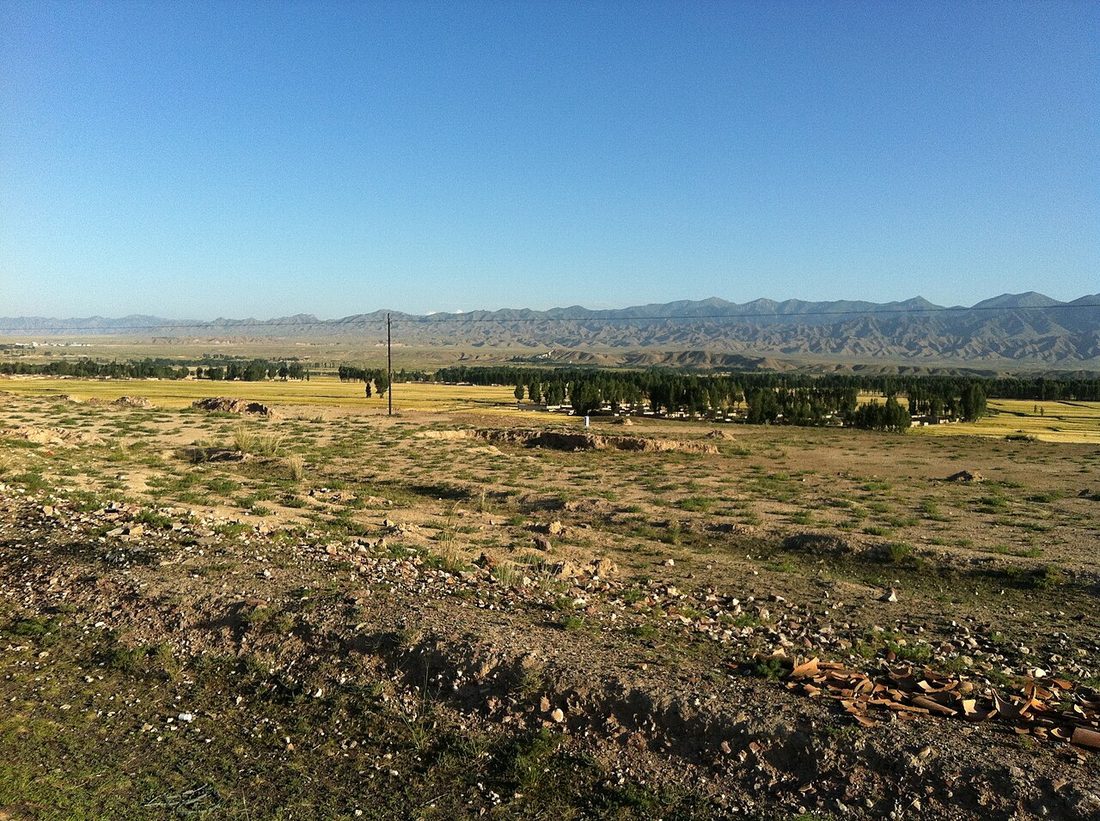
Yongchang · Jinchang · Gansu. The Hexi Corridor around the Longshou Mountain, where a village at the foot of the range grew into the city known as China's "Nickel Capital."
IV · The architect of innovation
Vice Premier Fang Yi and the "Eight Journeys"
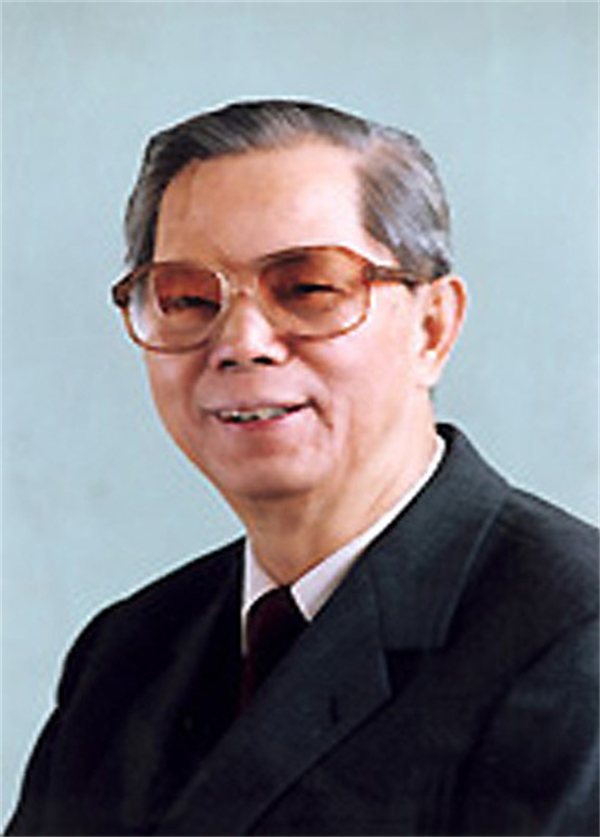
Fang Yi · 方毅 · 1916–1997. Vice Premier of China and President of the Chinese Academy of Sciences — the statesman-scientist who made eight working journeys to Jinchuan.
Fang Yi · 方毅
Statesman · Scientist-administrator
Born26 February 1916 — Xiamen, Fujian
Died17 October 1997 — Beijing
RolesVice Premier of China (1978–1982); President, Chinese Academy of Sciences (1979–1981); Director, State Science & Technology Commission (1978–1985)
1979Accompanied Deng Xiaoping to the United States; led a delegation to American technology centers including Georgia Tech, the Texas Medical Center and a Lockheed plant.
If the discovery belonged to the geologists, the scaling belonged in large part to Fang Yi — the figure often called the project's "behind-the-scenes hero." As head of the Chinese Academy of Sciences, he approached Jinchuan not as a distant administrator but as a technical orchestrator, and he envisioned it as one of the "Three Major National Mineral Resource Bases" for the comprehensive use of complex ores.
Between 1978 and 1986 he made what became known as his "Eight Descents to Jinchuan" — eight working journeys to the site itself. His method was a model of 科技联合攻关 ("technological joint attack"): he convened more than fifty research units and hundreds of experts from the Academy and from industry, weaving metallurgy, chemistry and mining engineering into a single interdisciplinary campaign. That collaborative blueprint became a template for China's later industrial rise.
"He treated the challenge not as a matter of paperwork, but as a problem of science to be solved by bringing the best minds to the ore."
On Fang Yi's method of joint technical attack
The results were measurable. Under the framework of the "Three Major Steps," nickel output climbed year over year in the mid-1980s. Fang Yi's global outlook reinforced the effort: after touring American aerospace and technology sites in 1979, he became convinced that high-performance nickel and cobalt alloys were the essential currency of modern aerospace — and he pressed for Jinchuan to master them.
Year
Nickel output
Milestone
1983
> 10,000 t
First major threshold surpassed
1984
15,000 t
Steady scaling of capacity
1985
20,000 t
Doubling within three years
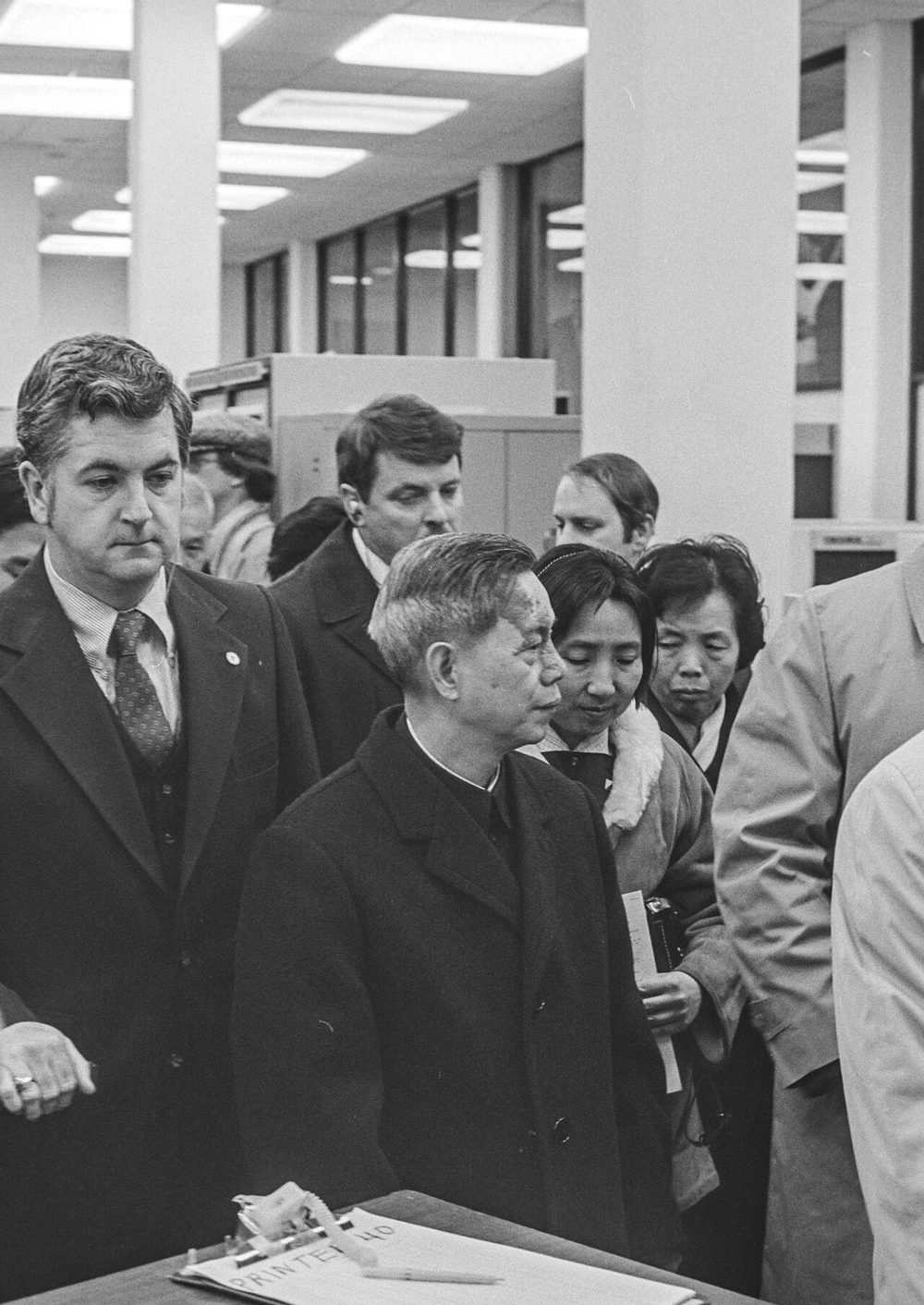
Fang Yi at the Georgia Institute of Technology, 1979. Leading a science-and-technology delegation during the historic opening to the West, he studied the alloys and methods he believed China would need to master.
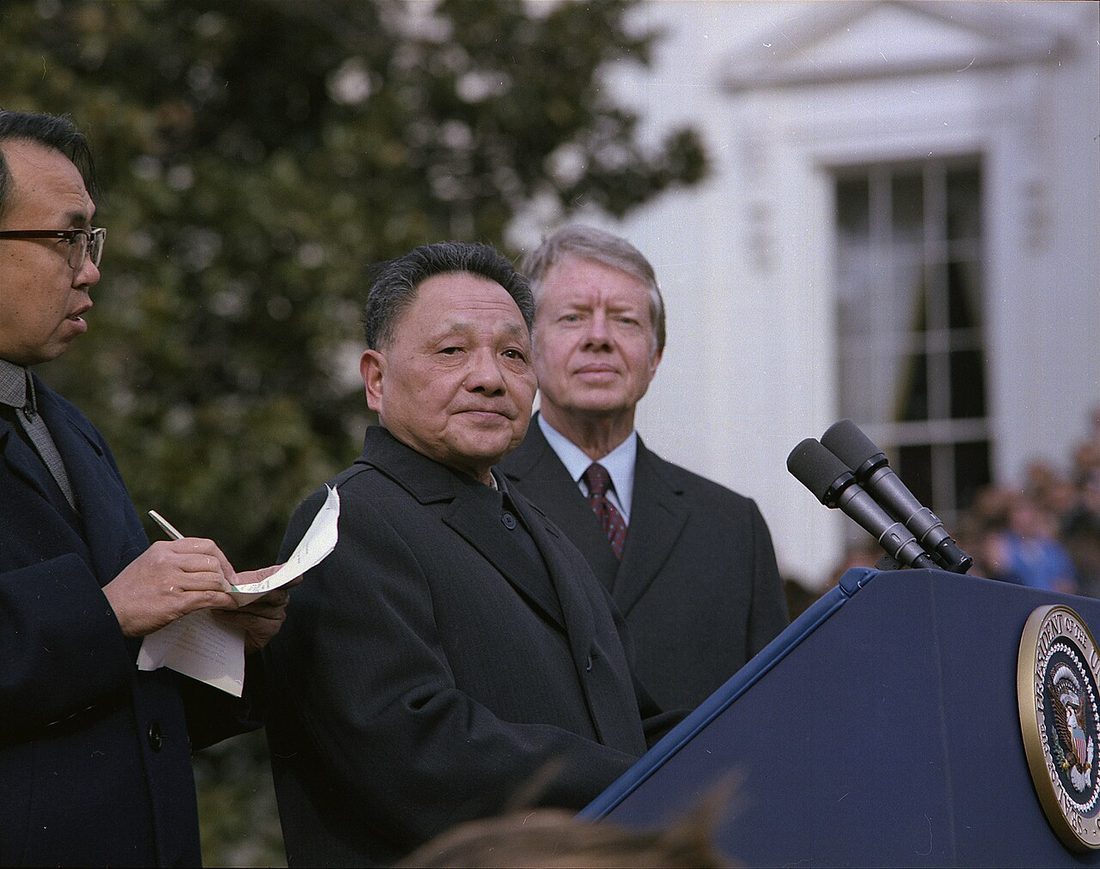
January 1979. Vice Premier Deng Xiaoping is welcomed to Washington; Fang Yi traveled with the delegation before branching off to American research centers. The opening set the stage for a decade of technological benchmarking.
The modern scale of Jinchuan rests on a decision to drill deeper. In the exploration of the "Second Mine Area," as the geological team weighed withdrawal, geologist Tang Zhongli held firm — famously "obstinate and stubborn" — and insisted on pushing an additional 200 meters into the flank of the dragon-headed mountain. The gamble revealed a vast hidden ore body accounting for roughly 65% of the deposit's total reserves. It became the main force of the whole complex, anchored by 1974 data confirming 520 million tons of ore holding about 5.52 million tons of nickel and 3.41 million tons of copper.
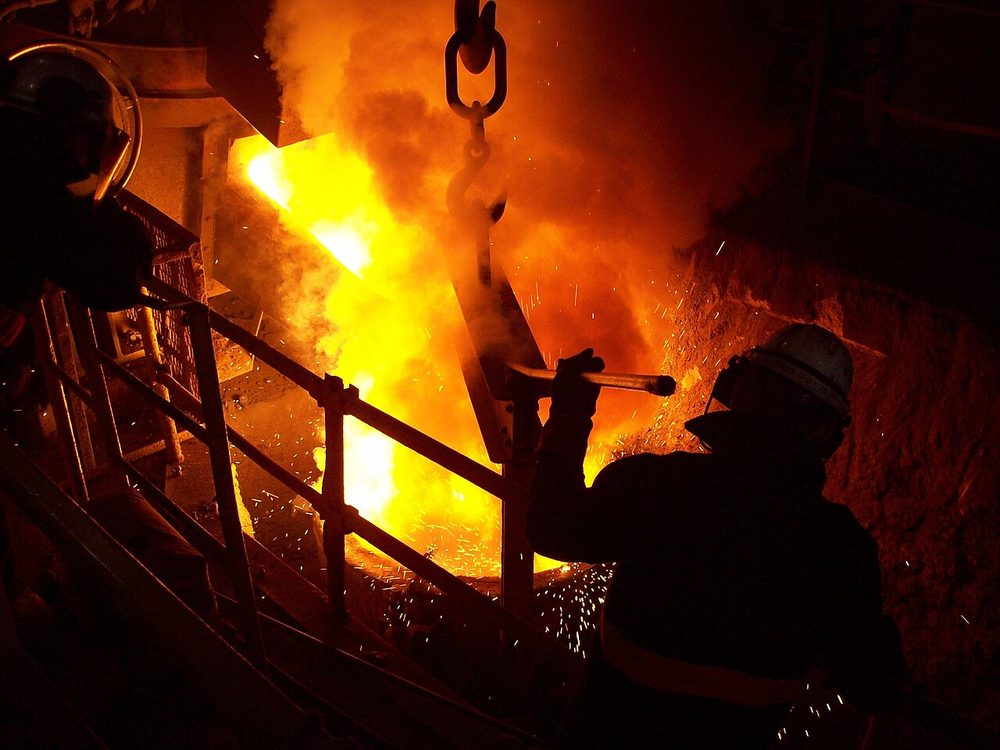
Processing this "Treasure Bowl" — 聚宝盆, an ore body carrying more than twenty companion elements including platinum, palladium and osmium — demanded metallurgy of a high order. In 1993 the company commissioned Asia's first nickel flash smelting furnace. It was paired with an oxygen-rich top-blown furnace, nicknamed the "rough-grain eater," capable of processing 3,000 tons of raw material a day — of which 30–40% could be imported concentrate — while holding dust emissions to a notably low 2–3%.
The rough-grain eater. Flash and top-blown smelting turned Jinchuan's complex sulfide ore into refined metal at industrial scale, extracting a full suite of companion elements from a single feed.
The Treasure Bowl · 聚宝盆
One ore body, more than twenty elements recovered
28NiNickel
29CuCopper
27CoCobalt
78PtPlatinum
46PdPalladium
76OsOsmium
45RhRhodium
77IrIridium
79AuGold
47AgSilver
34SeSelenium
16SSulfur
The commercial genius of the deposit is comprehensive utilization: rather than chasing nickel alone, Jinchuan learned to draw a whole ledger of valuable metals from the same feed — the technical vision Fang Yi championed through the resource-base program.
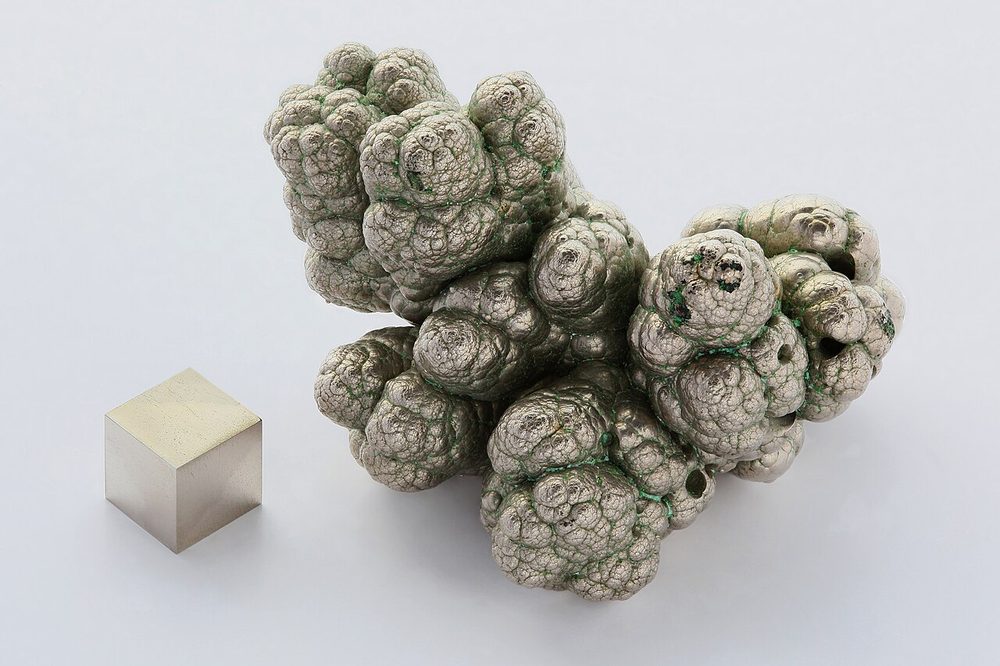
Refined nickel. Electrolytic nickel cathode of the kind Jinchuan first produced in 1964 — the finished form of the metal whose absence once constrained Chinese industry. Today the "Golden Camel" brand cathode is exported worldwide.
VI · The global horizon
Jinchuan Group in the twenty-first century
With the new millennium, the enterprise reached outward to secure supply across the global chain. In 2001 it restructured into Jinchuan Group Co., Ltd. The signature move of that expansion came in 2011–2012 with the acquisition of Metorex for US$1.32 billion, a deal that carried Jinchuan past global majors and planted its flag in the African copper-cobalt belt.
By 2024 the group produced over 330,000 tons of nickel-containing products a year — including nearly 190,000 tons of electrolytic nickel — alongside roughly 17,000 tons of cobalt and more than 400,000 tons of copper. It ranked 300th on the Fortune Global 500 and 78th on the China Top 500. Its international assets now include Chibuluma in Zambia; Ruashi, Kinsenda and the Musonoi project in the Democratic Republic of the Congo; and the Bahuerachi copper project in Mexico.
The direction of travel is clear in the capital numbers. Jinchuan's 2023 capital expenditure of about US$236 million — a sharp increase from roughly US$99 million the prior year — marks a decisive acceleration into the battery-materials supply chain. From a heavy-industry smelter, the company has grown into a high-technology supplier for the global energy transition, exporting advances such as its 0.05-millimeter "hand-tear" nickel strip since 2023.
Measure
Figure · 2024 snapshot
Ni-products
> 330,000 t annual
Electrolytic Ni
~ 190,000 t annual
Cobalt
17,000 t annual
Copper
> 400,000 t annual
Fortune 500
No. 300 global · No. 78 China
Metorex deal
US$1.32B (2011–2012)
Capex 2023
~ US$236M (vs ~US$99M prior year)
Chronology · 1958 → 2026
The Jinchuan arc, at a glance
1958 · JUN
Malachite spark at Baiji Azui
The 145th Team finds green-stained stones at the foot of Heihu Mountain in the Hexi Corridor.
1959 · JUN
Yongchang Nickel Mine established
The Ministry of Metallurgy moves from geological exploration to organized industry.
1961 · JAN
Renamed Jinchuan Nonferrous Metals
The corporate identity of the "Nickel Capital" is formalized.
1964
First electrolytic nickel · 22.43 tons
Domestic refining capacity is achieved for the first time.
1966
"First Phase" integrated complex
Mining, dressing and smelting brought into one program with domestic technology.
1974
Second Mine Area confirmed
520 Mt of ore holding ~5.52 Mt Ni and 3.41 Mt Cu — ~65% of total reserves.
1978–86
Fang Yi's "Eight Descents"
The Vice Premier and Academy president leads eight working journeys and a fifty-unit joint technical attack.
1983–85
Nickel output doubles
Rising from >10,000 t to 20,000 t under the "Three Major Steps" framework.
1993
Asia's first Ni flash smelting furnace
Commissioned with an oxygen-rich top-blown counterpart — 3,000 t/day, 2–3% dust.
2001
Restructured as Jinchuan Group
Corporate form aligned with global-scale ambition.
2011–12
Metorex acquisition · US$1.32B
African copper-cobalt footprint acquired; Jinchuan Africa built out.
2023
"Hand-tear" nickel strip · 0.05mm
Battery-materials export product signals the pivot to the energy transition.
Focus on world-class profitability and high-technology upgrades as a projected global nickel deficit widens.
VII · The eternal treasure bowl
From a single stone to the 2026 horizon
The Jinchuan story is a study in the compounding of two forces: visionary leadership, embodied by Fang Yi, and the persistence of geological pioneers such as Tang Dongfu, Guo Chunshan and Tang Zhongli. From one green stone in the ice, a nation constructed an industrial titan and, with it, a measure of resource security it once lacked.
As Jinchuan advances its "2026 Vision," it aims for world-class profitability while ensuring that a growing share of its products carry high-technology upgrades. With analysts pointing to a projected global nickel deficit in 2026, the role of a technologically advanced, comprehensively-utilizing producer only grows in importance. The "Gold Baby" of the Gobi has matured — ready, as its own vision puts it, to scale the next height of global resource security.
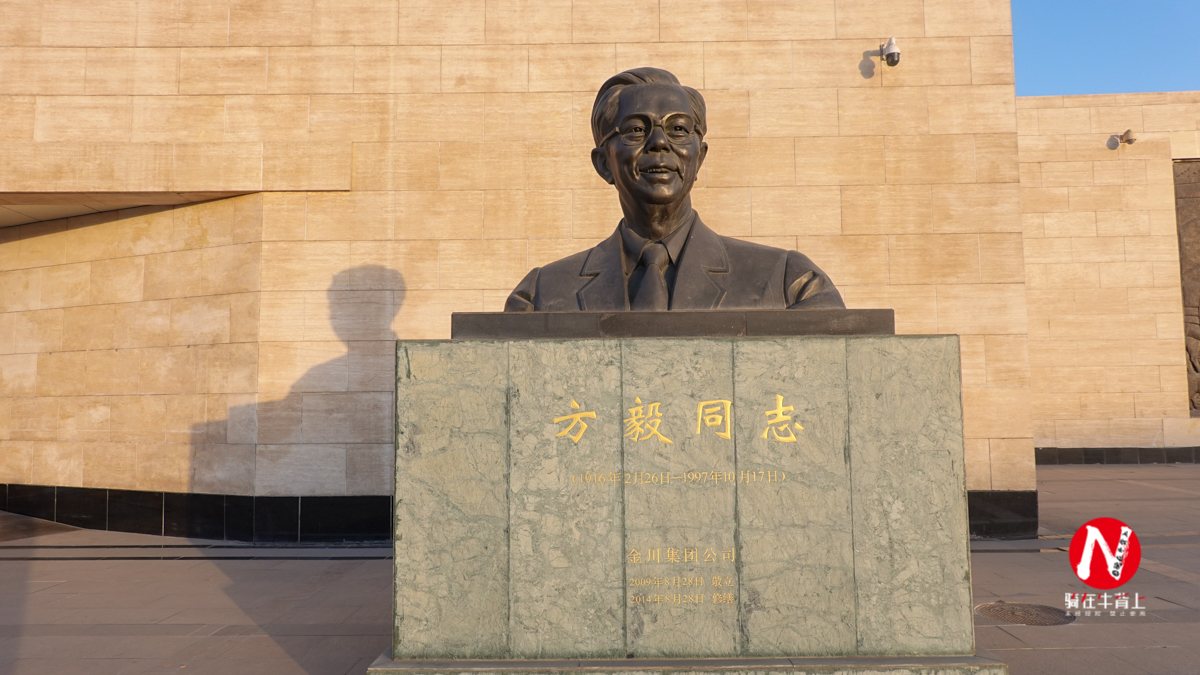
Cast in bronze at the Nickel Capital. A memorial bust of "Comrade Fang Yi" (方毅同志, 1916–1997) stands at Jinchuan Group in Jinchang — raised by the company in 2009 to honor the statesman-scientist whose eight journeys helped build the base. The tribute stands where the desert once did.
One green stone in the Gobi opened the way to a nation's own foundry of nickel.
METHODOLOGY — Documentary feature tracing the founding and growth of the Jinchuan nickel base and the contribution of Vice Premier Fang Yi. Figures are drawn from public corporate disclosures, encyclopedic biographical records and industry reporting; where a precise figure was unavailable it has been described in general terms rather than estimated. Company snapshot: 2024 production of >330,000 t nickel-containing products, ~190,000 t electrolytic nickel, ~17,000 t cobalt, >400,000 t copper; Fortune Global 500 rank No. 300; No. 78 China Top 500. Metorex acquisition value of US$1.32B (2011–2012). Second Mine Area reserve reference: 520 Mt ore / ~5.52 Mt Ni / 3.41 Mt Cu (1974 data). Flash smelter commissioned 1993 with paired oxygen-rich top-blown furnace capable of 3,000 t/day at 2–3% dust.
UNITS — t = tonnes · kt = thousand tonnes · Mt = million tonnes · Ni = nickel · Cu = copper · Co = cobalt · Pt/Pd/Rh/Ir/Os = platinum-group metals · CAS = Chinese Academy of Sciences · RKAB not applicable (China domestic).